
Table of Contents
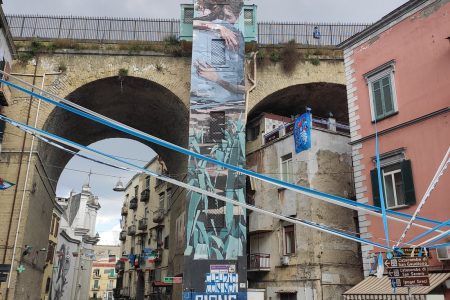
The Esoteric Naples is not the city you encounter at first glance. It is a Naples that lives behind the scenes between an alley and a square, in the symbols that show themselves and at the same time hide. Its urban layout, laid out by the Greeks, seems almost designed like a sacred map. The three parallel lines of the Decumani are not simple roads. Many read them as an initiatory path, an ideal passage from the material to the spiritual world. In this geometry, every corner becomes a symbol, every little square a threshold between different eras and beliefs.
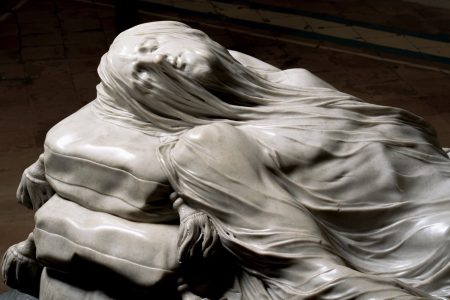
At the center of this universe is the most enigmatic figure in Neapolitan esotericism: Raimondo di Sangro, the Prince of Sansevero. In its Chapel, a true secular temple hidden among the narrow streets of the center, everything seems to speak to you in a secret language. The Veiled Christ strikes you with that impossible veil that seems suspended between art and magic, between science and mystery.
Also not to be overlooked is the city's relationship with the death, so particular that it has no equal elsewhere. In the Church of the Anime del Purgatorio in Arco, skulls are not symbols of terror, but a familiar presence. The beggar souls, adopted and devotedly cared for, tell of a perpetual bond between the living and the dead.
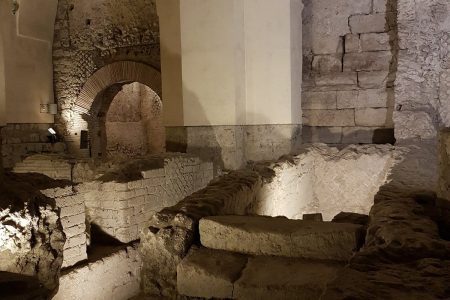
And when you go down into the dungeons of Naples, everything changes again. In the belly of the basement of San Lorenzo Maggiore, among the remains of the Roman forum and ancient stores, you almost seem to feel an archaic energy. It is here that you really feel how much Naples is a city built on many other civilizations, one on top of the other like layers of memory.
The most fascinating thing is that all these levels do not cancel each other out, but coexist. This is what makes esoteric Naples unique. I pagan symbols appear alongside saints, Masonic emblems peek out among Baroque decorations, Egyptian traditions survive in the names of squares, and ancient superstitions mingle with Christian devotions.
And if you happen to go around in the alleys in the evening, when the lights are low and the din fades, the city really takes on the face of a great initiatory labyrinth. Every curve seems to lead elsewhere, every alley seems to tell a story you do not yet know. It is in those moments that Naples gives you the feeling that you can open invisible doors wide.
Perhaps that is the secret of esoteric Naples: it is a city that never quite separates the visible from the invisible. It lets them coexist. And those who experience it, even for a day, end up feeling part of this double dimension. To breathe in its "darker" essence, we offer you a 3-day itinerary in esoteric Naples to explore the most striking and mysterious areas of Campania's capital city.
Day 1 - The historic center
The first day of the itinerary can start with a fantastic walking tour of downtown Naples with admission ticket to Sansevero Chapel. The walk starts from Via Duomo, and then reaches Via dei Tribunali, Piazza San Gaetano and Piazza San Domenico Maggiore. Then you will visit the Sansevero Chapel, where the Veiled Christ, with his impossible veil, seems almost a symbol of revelation, while in the underground rooms the Anatomical Machines continue to defy all rational explanation.
Alternatively, we recommend a tour between San Gregorio Armeno and Spaccanapoli, in which each stage recounts a millennia-old cultural journey. Specifically, you will be able to see Nile Square, where the Egyptian cult of Serapis lives on in statues of the river god,i Decumani, with their ancient geometries, real ritual corridors and the Seat of the Nile, with pagan symbols still emerging from the walls like presences that have survived time.It is a short but intense walk, in which the city reveals its most occult soul.
For lunch you can stop at one of the typical restaurants in the Decumani for a pizza on the fly or to taste the best dishes of Neapolitan cuisine. In the afternoon, however, you can drop by one of the most evocative and eerie places in Naples, the Church and the crypt of the Souls in Purgatory. Here lives the famous worship of the pezzentelle souls: skulls adopted as protectors, to whom care, prayers and confidences were offered. It is a place where the line between the world of the living and the world of the dead seems very thin, one of the most authentic expressions of popular Neapolitan spirituality.
If you have time left over in the afternoon you can make a tours in the Naples Underground and the Basilica of San Lorenzo Maggiore. At 316 St. Gaetano Square is the entrance to the archaeological site that extends below the basilica and consists of the ancient macellum, or the roman market dating back to the first century AD. On the lower levels you'll see its craft stores, the structure of which was hidden by the construction of the church above in the 13th century. You can end the day in the evening with a night tour of the less illuminated alleys of the historic center. This is the perfect time to listen to legends, stories of apparitions, hidden symbols and initiatory tales among the alleys and squares.
You might be interested
Walking Tour of the Center of Naples with admission ticket to the Sansevero Chapel
per person Book
Walking tour among the wonders of the Sanità district
per person Book
Shared walking tour of Lake Avernus
per person Book
Admission ticket to the Neapolis Sotterrata and the Basilica of San Lorenzo Maggiore
per person Book
The Museum of the Treasure of San Gennaro and the Royal Chapel in Naples (entrance fee)
per person Book
Day 2 - The Rione Sanità
The second day of your itinerary can start from one of the most impressive and mysterious places in the city, namely the Fontanelle Cemetery, an immense ossuary carved out of the tuff, where thousands of skulls and bones form a kind of underground cathedral dedicated to the cult of the dead. Here the Neapolitan people have practiced ancient rituals for centuries, with "adopted" skulls, prayers for protection, stories of apparitions and presences that, according to tradition, accompany those who visit with an open mind.
Coming out of the charnel house you can move into the heart of the Healthcare, a neighborhood steeped in history and popular spirituality. The narrow alleys tell of a more secret Naples, made up of small legends and beliefs that still survive today. The walk includes some very interesting stops such as the House of the Munaciello, linked to the mischievous (but often benevolent) spirit of folk tradition, the ancient palaces where protective "presences" are said to dwell, and the small stores and votive altars dedicated to the dead, hidden in the most unsuspected corners.
For lunch you can stop at one of the local eateries in the area, such as the famous Concettina at the Three Saints and in the early afternoon the tour of esoteric Naples can continue with the Catacombs of San Gaudioso, an extraordinary place where early Christianity is intertwined with symbols and rituals bordering on the esoteric. The skulls embedded in the walls, which belonged to noble families, create a unique sight, but the most striking detail is the ritual of the "draining" of corpses, a funeral practice typical only of this site, which testifies to a relationship with death profoundly different from the modern one.
A few steps away from the catacombs is then the Basilica of Santa Maria della Sanità, a place in which popular devotion and an aura of ancient mystery coexist. The crypt preserves relics, testimonies of worship and symbols that emerge among Baroque architecture and early Christian remains. It is a spot where you can clearly perceive how Sanità has been one of the strongest spiritual poles in Naples for centuries. In the evening you can instead make a Sanity ghost tour, amidst folk tales, apparitions, and nighttime legends, or a dinner or aperitif at one of the area's many clubs, where the popular soul of the neighborhood mixes with a new urban vitality.
Day 3 - Posillipo and Campi Flegrei
For this last day in Naples you will move to the area of the Phlegraean Fields for a walking tour of Lake Avernus which in the past was considered by the ancients to be the entrance to the Underworld. Today the area is one of the main natural habitats for birdlife, and along its banks are archaeological remains such as the Temple of Apollo and the famous Cave of the Cumana Sibyl.
The geometries, the sloping stones, and the almost perfect cut of the cave's underground passage create an environment charged with energy. According to tradition, this was where the prophetess operated, connecting man with the will of the gods. After such a richly evocative morning, Pozzuoli offers a great setting for a break. Here you can stop for a bite to eat at one of the small waterfront restaurants with a sea view and relaxing atmosphere.
The afternoon continues with another descent into mystery by visiting the Cave of Seiano, a corridor of more than 800 meters carved into the rock. Passing through it gives the impression of walking inside a ritual passageway, a tunnel connecting two worlds. Some traditions tell that it was used for necromancy practices and initiatory paths. At the end of the tunnel opens the Pausilypon, a place that truly feels like a threshold made of Roman ruins, perfect natural acoustics and a panorama that alternates between beauty and eeriness. The presence of the ancient theater overlooking the sea makes the atmosphere even more unreal.
The next stop is the enigmatic Gaiola Island, famous for its eerie curse. Throughout the twentieth century, several owners had tragic fates including sudden deaths, economic failures and disappearances. Beyond the legends, the place really has a special energy. The sea, the currents, the submerged ruins and the loneliness of the little island make the experience almost magnetic.
After such a day full of myths, legends and underground passages, the ideal conclusion is a night view from via Petrarch or from the Belvedere of Posillipo. The view of the Gulf allows you to get rid of everything that has accumulated and close the trail in a peaceful and relaxing way.
0 Comments