
Table of Contents
L'Epiphany in Italy is a very important and meaningful holiday, celebrated on the January 6. It has religious origins, but over time it has been enriched with folk traditions that make it especially dear, especially to children. The term "Epiphany" comes from Greek and means "event", pointing to the revelation of Jesus as the son of God to all peoples.
From the Christian perspective, this holiday commemorates the visit of the Magi to baby Jesus: it is the moment when Jesus manifests himself to the whole world, represented by the Magi who arrive from afar bringing gifts such as gold, incense and myrrh. These characters have a strong symbolic value and are often represented in Italian nativity scenes. Just the nativity scene is traditionally completed with the figurines of the Three Kings only on Epiphany Day.
Alongside its religious significance, Epiphany in Italy is strongly linked to the figure of the Befana, a friendly old lady who flies on a broomstick and, on the night of January 5-6, fills the stockings of the little ones. To the best of them she brings sweets and small gifts, while to the less obedient ones he leaves some coal, sugar compound.
In many Italian cities, Epiphany is celebrated with markets, fairs and popular demonstrations. One of the most famous celebrations takes place in Rome, in Piazza Navona, where the stalls and decorations attract many people every year. A Naples, on the other hand, Befana is celebrated with the traditional gathering in the Market Square, including musical concerts and special events. Some regions also hold religious processions and performances reenacting the arrival of the Three Kings.
The January 6 is therefore a public holiday throughout Italy, with schools and offices closed, and traditionally marks the end of the Christmas season. Not surprisingly, it is said, "L'Epifania tutte le feste porta via," signifying a return to everyday life after the Christmas vacations.
If you don't know what to give for Epiphany, don't despair! Purchase one of the gift card license plates Movery to surprise your loved one with an unforgettable tourism experience. After all, what could be better than a tour, masterclass or themed workshop to explore the wonders of Campania?
You might be interested
Private boat tour of the Amalfi Coast, full day with aperitif, from Salerno and other ports
per person Book
Private half-day Amalfi Coast tour with aperitif on board and departure from Salerno and other ports
per person Book
Pompeii Tour from Salerno with Transportation, Entrance Ticket and Guide
per person Book
Excursion to Pompeii from Rome: Guided Tour, Entrance and Lunch
per person Book
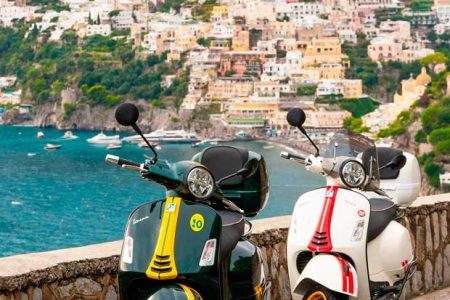
Vespa tour on the Amalfi Coast among beauty and history with departure from Naples
per person Book
Shared guided tour of the Pompeii excavations with skip-the-line ticket included - Departure from Pompeii
per person Book
Tour of the Royal Palace of Caserta by train from Naples: with or without audio guide
per person Book
Guided tour of the Palace of Portici
per person Book
The 5 must-see destinations in Campania
The Campania is a region rich in history, art, natural landscapes and gastronomic traditions. Thanks to the biodiversity of its territory, which includes sea, mountains, art cities and archaeological sites, it offers many destinations of great tourist and cultural interest.
Naples is the beating heart of the region and one of the most fascinating cities in Italy. Its historic center, declared a UNESCO World Heritage Site, is a tangle of narrow streets, churches and historic buildings. Among the most important sights are the Cathedral, the Angevin Male, Castel dell'Ovo and the National Archaeological Museum. The promenade offers striking views of the Gulf of Naples and Vesuvius, the dormant volcano that dominates the landscape. Naples is also famous for its cuisine, particularly pizza, considered a symbol of the city, but there is no shortage of other goodness such as sfogliatelle, babà, limoncello, and much more.
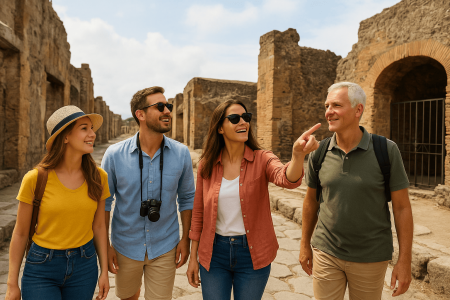
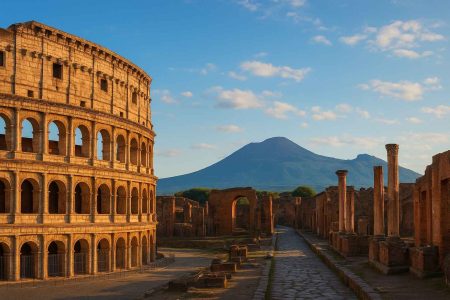
Pompeii and Herculaneum are two archaeological sites of extraordinary historical importance. The cities were destroyed and buried by the eruption of Vesuvius in 79 A.D., but this very event allowed for exceptional preservation of the buildings. Visiting these places it is possible to see houses, stores, streets, theaters and frescoes that tell the story of daily life in ancient Rome. Pompeii, in particular, is one of the most visited archaeological sites in the world.
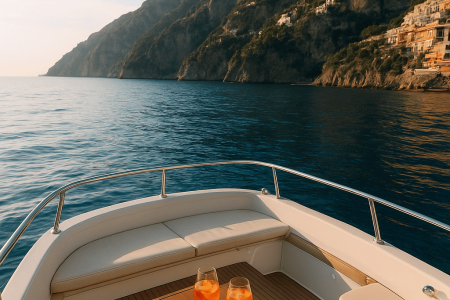
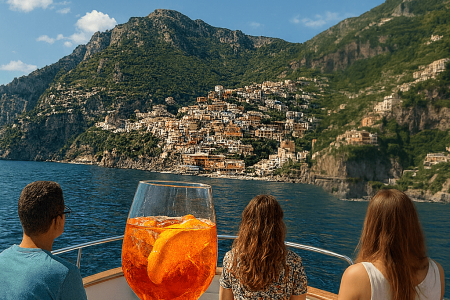
The Amalfi Coast is famous among tourists from all over the world for its spectacular landscapes and villages overlooking the sea. Amalfi, Positano and Ravello are just a few of the best-known locations, characterized by colorful houses, narrow streets, and scenic terraces. The coast is traversed by a scenic road that offers breathtaking views of the sea. In addition to its natural beauty, the Coast is known for its lemon production and seafaring traditions.
The Royal Palace of Caserta is one of the largest and most impressive royal palaces in Europe. Built in the 18th century at the behest of the Bourbons of Naples, the palace, designed by Luigi Vanvitelli, is famous for its ornate halls, monumental staircase and vast park. The royal garden stretches for several kilometers and is embellished with fountains, statues and waterfalls, creating a striking architectural and landscape ensemble.
The Cilento is a less touristy area than other areas of Campania, but it offers unspoiled natural landscapes and a strong cultural identity. Here you can encounter sandy beaches, mountains, medieval villages and the Cilento, Vallo di Diano and Alburni National Park. Among the most popular seaside destinations we have Acciaroli, Marina di Camerota, Palinuro, Santa Maria di Castellabbate and Agropoli. Also of great importance is the Paestum Archaeological Park with its Greek temples, among the best preserved in the world. Next to the archaeological area is the National Archaeological Museum of Paestum, which preserves artifacts fundamental to understanding the city's history. Prominent among them is the famous Tomb of the Diver, a unique fresco.
0 Comments